
Landscaping for Custom Homes Melbourne
Building a custom home is a significant investment, and the landscape should be considered just as carefully as the architecture itself. When planned correctly, landscaping becomes an extension of the home, creating a seamless connection between indoor and outdoor spaces while enhancing street appeal, functionality and long-term value.
What You'll Learn
Why landscaping should be planned before construction is complete
How to create a landscape that complements your home's architecture
Common mistakes homeowners make during a custom home build
The key elements of a successful custom home landscape
When to engage a landscape design and construction team
When Should Landscaping Be Planned for a Custom Home?
One of the most common mistakes we see is homeowners leaving landscaping until after the house has been completed. While the landscape is often one of the final stages of a project, the planning process should begin much earlier.
Ideally, landscape design should be considered alongside the home's architectural design. This allows outdoor spaces to be integrated into the overall vision rather than treated as a separate project later on.
By planning early, opportunities can be identified to improve site levels, retain existing trees, coordinate drainage solutions and ensure outdoor living areas connect naturally with internal spaces.
Early planning also provides a more accurate understanding of project costs, helping homeowners allocate budget appropriately across both the home and landscape.
A custom home deserves a landscape that feels intentional from day one rather than something added as an afterthought.
Planning a New Custom Home?
Our team works closely with homeowners, builders and architects to create landscapes that feel connected to the home's architecture and lifestyle requirements.
The Key Elements of a Successful Custom Home Landscape
The best landscapes are those that feel like they have always belonged with the home. Every element should work together to create a cohesive experience.
Architectural Connection
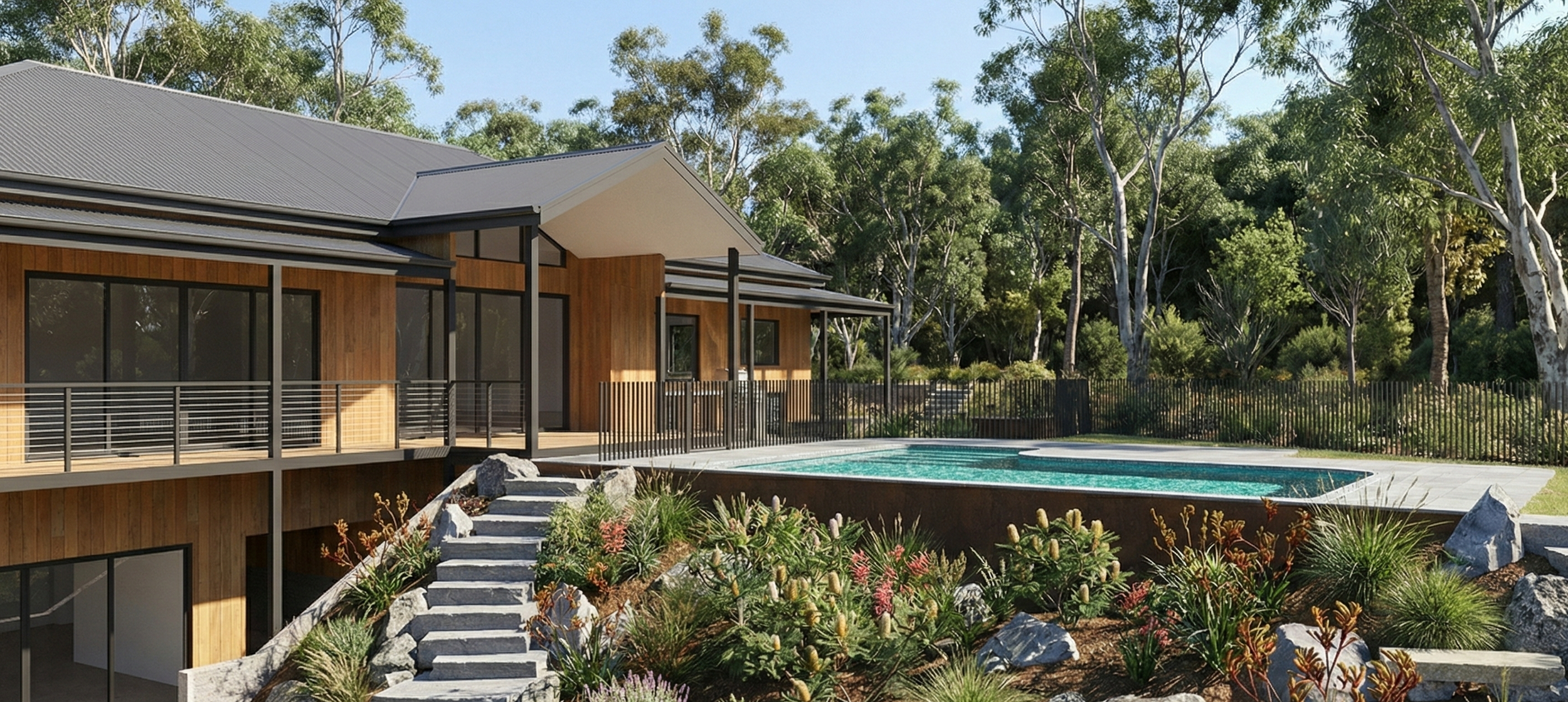
Materials selected throughout the landscape should complement those used within the home's architecture. This may include natural stone paving, architectural concrete, timber detailing or feature planting that reflects the style of the property.
Outdoor Living Spaces
Modern homes increasingly prioritise outdoor living. Well-designed entertaining areas, outdoor kitchens, pools, fire pits and lounge spaces allow homeowners to extend their living environment beyond the walls of the home.
Planting Design
Plant selection plays a critical role in softening architectural forms and creating visual balance. Layered planting can introduce texture, colour and seasonal interest while maintaining a clean and considered appearance.
Functional Layout
A successful landscape must also be practical. Pathways, access points, drainage solutions, lighting and storage should all be considered during the design process.
Long-Term Growth
A landscape should look great on completion day, but it should also mature beautifully over time. Careful planning ensures plants, trees and outdoor spaces continue to improve as the property evolves.
When all of these elements work together, the result is a landscape that feels like a natural extension of the home.
Custom Landscape Designed to Complement Modern Architecture
Many of our custom home projects begin with a simple goal: ensuring the landscape enhances rather than competes with the architecture.
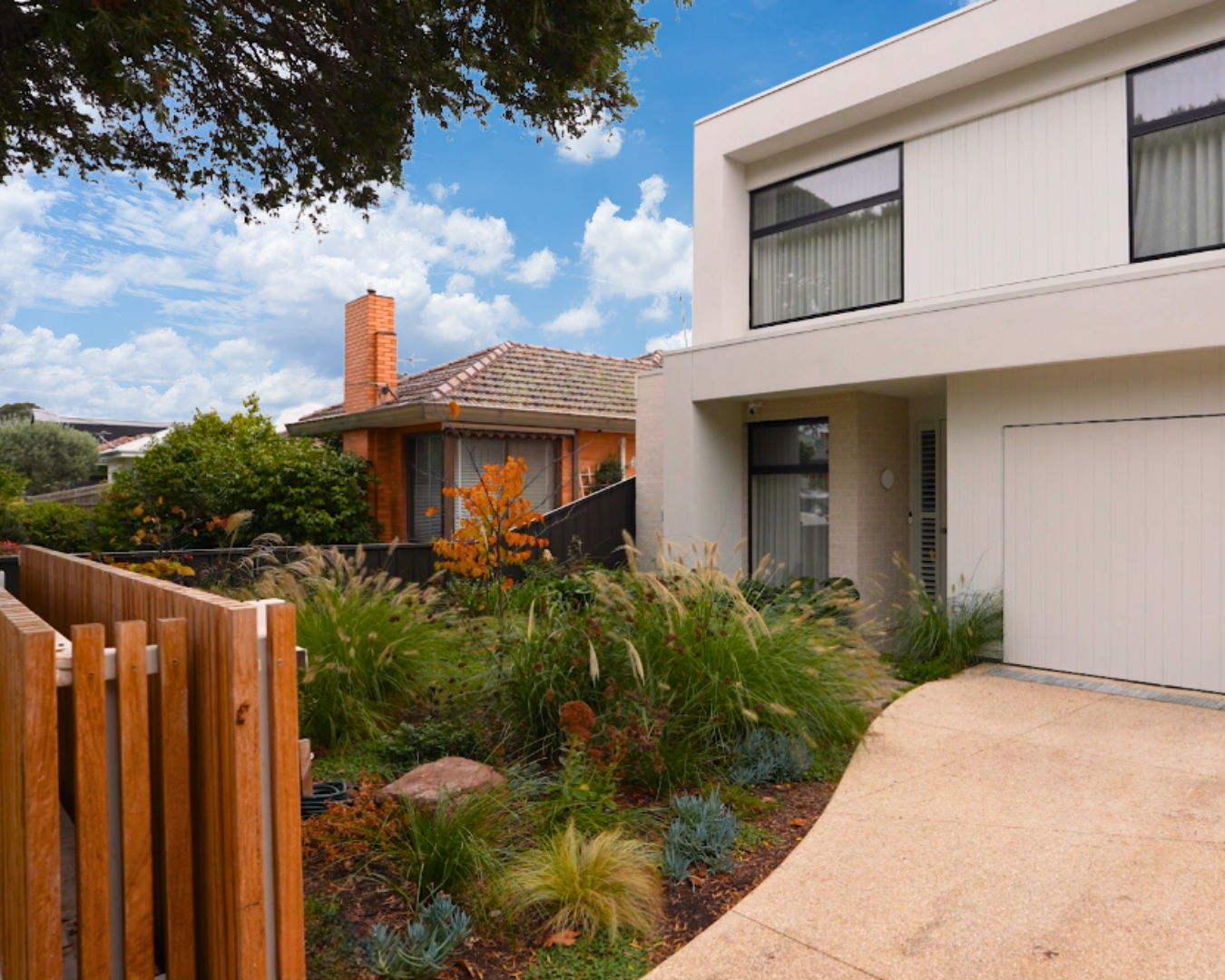
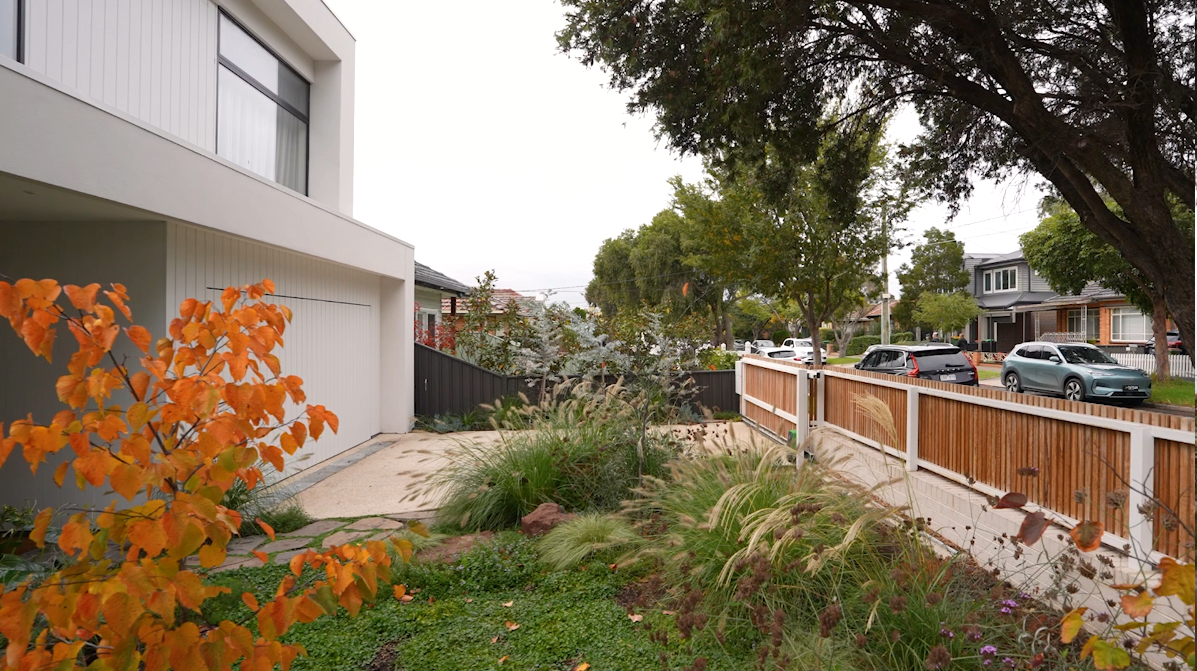
For one recent Hughesdale project, the landscape was designed to soften strong architectural lines while maintaining a clean and contemporary aesthetic. Natural stone paving, architectural concrete elements and layered planting were used throughout the front and rear gardens to create a seamless transition between indoor and outdoor spaces.
The result was a landscape that enhanced the home's visual impact while delivering practical spaces for entertaining, relaxation and everyday family living.
Common Landscaping Mistakes During a Custom Home Build
Even the most impressive homes can be let down by poor landscape planning.
Leaving Landscaping Too Late
Waiting until construction is complete often limits design opportunities and can lead to costly rework.
Focusing Only on the Front Garden
While street appeal is important, outdoor living spaces are often where homeowners spend most of their time.
Underestimating Budget Requirements
Landscaping is a significant component of a completed home. Establishing a realistic budget early in the process helps avoid compromises later.
Ignoring Future Growth
Plants, trees and gardens change over time. Designing for long-term growth creates a more successful landscape outcome.
Choosing Style Over Function
The most successful landscapes balance aesthetics with usability. Beautiful spaces should also be practical for everyday life.
Frequently Asked Questions
-
Costs vary depending on the size of the property, site conditions and scope of works. Engaging a landscape professional early can help establish a realistic budget.
-
Ideally during the architectural design phase or before construction commences.
-
Yes. Many homeowners choose to prioritise key areas first and complete additional elements over time.
-
Well-designed outdoor living spaces, quality materials, mature planting and strong connections between the home and garden generally deliver the greatest value.
-
Yes. Collaboration with builders, architects and homeowners is often an essential part of delivering successful custom home landscapes.
Create a Landscape That Completes Your Custom Home
A custom home deserves more than a standard landscape solution. By considering design, construction and outdoor living from the beginning, you can create a landscape that enhances your home's architecture, supports your lifestyle and adds long-term value.