
The Role of Lighting in Landscape Design
When homeowners think about landscaping, their attention is often drawn to paving, planting, pools and outdoor entertaining areas. Lighting is frequently considered much later in the process, yet it can have one of the biggest impacts on how a landscape looks, feels and functions.
At RYCOR Landscapes, we see lighting as an essential component of landscape design rather than an optional extra. When planned correctly, landscape lighting enhances architecture, highlights key features, improves safety and allows outdoor spaces to be enjoyed long after the sun goes down.
The most successful landscapes don't disappear at night. They simply transform into a different experience.
What You'll Learn
Why lighting is a critical part of landscape design
How lighting enhances outdoor living spaces
The different types of landscape lighting
Common lighting mistakes homeowners make
How to create a balanced and functional lighting plan
Landscape Lighting Is About More Than Visibility
Many people assume landscape lighting is simply about helping people see where they're walking. While safety is certainly important, quality lighting does much more than that.
Thoughtfully positioned lighting can completely change how a landscape is experienced after dark. It can draw attention to feature trees, highlight architectural elements, create mood and make outdoor spaces feel warm and inviting.
Some of the most impressive landscapes we build during the day take on an entirely different character at night through carefully considered lighting design.
Without lighting, much of the investment made in a landscape can disappear once the sun sets.
Planning a New Landscape?
Lighting should be considered alongside planting, paving and outdoor living spaces rather than being added as an afterthought.
Ready to discuss your project?

Why Lighting Should Be Included Early in the Design Process
One of the most common mistakes homeowners make is waiting until the end of a project to think about lighting.
By considering lighting early, infrastructure can be installed before paving, garden beds and hardscape elements are completed. This allows cables, conduits and fittings to be integrated seamlessly into the landscape.
At RYCOR, lighting is often discussed during the design phase to ensure every element works together as part of the overall vision.
Early planning also helps establish realistic budgets and ensures outdoor spaces function exactly as intended once construction is complete.
The Different Types of Landscape Lighting
Pathway Lighting
Pathway lighting improves safety while guiding movement throughout the landscape.
When used correctly, pathway lights create subtle illumination without overwhelming the surrounding space.
They are commonly used along:
Garden paths
Entry walkways
Driveways
Stepping stone paths
The objective is to provide guidance rather than excessive brightness.
Feature Tree Lighting
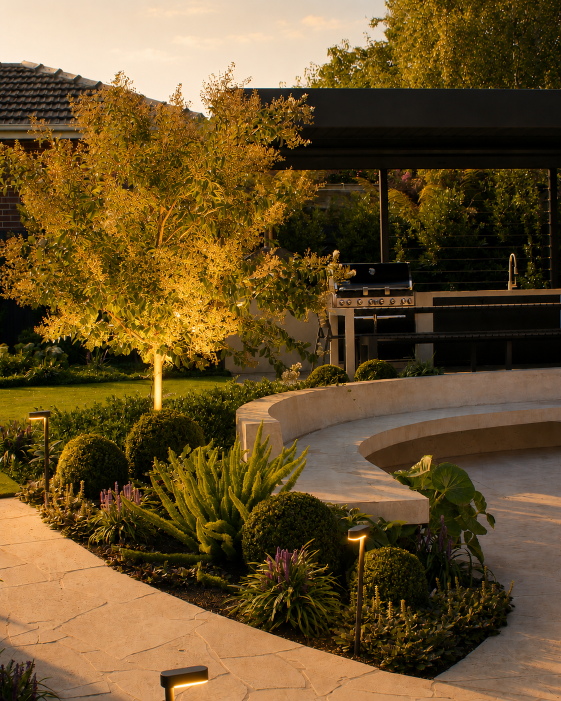
One of the most effective ways to create impact within a landscape is through uplighting feature trees.
By directing light upwards through the canopy, trees become focal points after dark and create depth within the landscape.
This technique works particularly well for:
Mature trees
Sculptural trees
Multi-stemmed specimens
Feature planting
Architectural Lighting
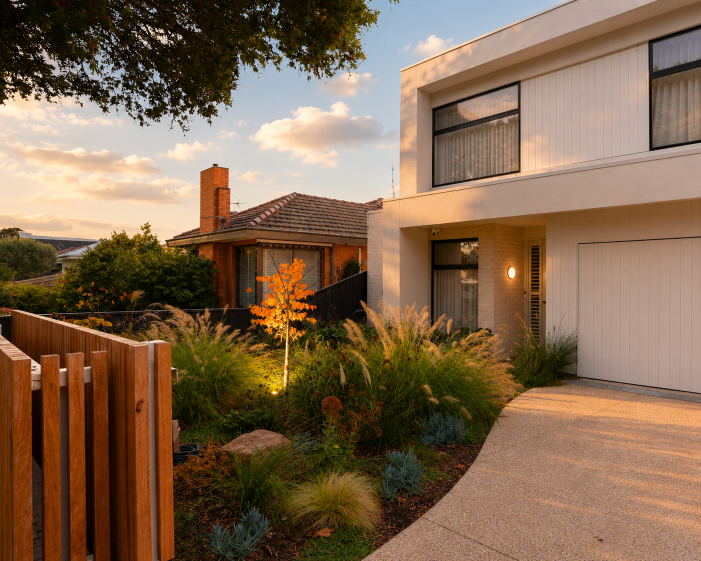
Landscape lighting can be used to enhance the architecture of the home itself.
Carefully positioned fittings can highlight textures, materials and architectural details while creating a stronger connection between the home and landscape.
This approach is particularly effective on custom homes where the architecture is a key design feature.
Outdoor Living Lighting
Outdoor entertaining areas require a balance between functionality and atmosphere.
Lighting can be incorporated into:
Outdoor dining spaces
BBQ areas
Decking
Seating zones
Pool surrounds
The goal is to create spaces that feel comfortable and inviting rather than overly bright.
Garden Lighting
Garden lighting helps showcase planting design after dark.
Layered planting, feature shrubs and textured foliage can all be highlighted to create depth and visual interest throughout the landscape.

Featured Project
On a recent RYCOR project, lighting played a significant role in transforming the outdoor experience.
During the day, the landscape featured architectural paving, layered planting and carefully considered outdoor living spaces. At night, feature tree uplighting, pathway lighting and subtle architectural lighting completely changed the atmosphere of the property.
The result was a landscape that remained functional, welcoming and visually impressive well beyond daylight hours.
Lighting allowed the homeowners to enjoy their outdoor spaces throughout the evening while showcasing the landscape from both inside and outside the home.
See how RYCOR integrates lighting into complete landscape design and construction projects.
Common Landscape Lighting Mistakes
Installing Lighting Too Late
Retrofitting lighting after a landscape has been completed is often more expensive and less effective than planning it from the beginning.
Using Too Much Light
One of the biggest misconceptions is that brighter is better.
The most successful landscape lighting schemes are often subtle, allowing focal points and key features to stand out naturally.
Focusing Only on Functional Areas
Lighting should not be limited to pathways and entrances.
Feature trees, planting and architectural elements all contribute to the overall night-time experience.
Ignoring Lighting Layers
Just as planting uses layers, lighting should also be layered.
Combining pathway lighting, feature lighting and ambient lighting creates a more sophisticated and balanced result.
Choosing Fixtures Based on Price Alone
Quality fittings generally offer better performance, durability and longevity, particularly in outdoor environments.
The Benefits of Professional Landscape Lighting
A professionally designed lighting plan can:
Improve safety and visibility
Extend the use of outdoor spaces
Enhance street appeal
Highlight architectural features
Showcase planting design
Increase property value
Create atmosphere and ambience
Most importantly, it ensures the landscape can be enjoyed during both day and night.
Frequently Asked Questions
-
Absolutely. Landscape lighting enhances functionality, improves safety and allows outdoor spaces to be enjoyed after dark.
-
Ideally during the landscape design phase so infrastructure can be incorporated before construction is complete.
-
Professionally installed lighting can improve street appeal and enhance the overall presentation of a property.
-
Every project is different, however pathway lighting, feature tree lighting and outdoor living lighting are commonly prioritised.
-
Yes, although it is generally more efficient and cost-effective when included as part of the original landscape design.
-
The most successful lighting schemes are typically subtle and layered rather than excessively bright.
Bring Your Landscape to Life After Dark
A great landscape shouldn't disappear when the sun goes down. Thoughtful lighting allows outdoor spaces to remain functional, welcoming and visually impressive throughout the evening while enhancing both the home and garden.
Whether you're building a new landscape or upgrading an existing outdoor space, incorporating lighting into the design process can dramatically improve the final result.
Ready to discuss your project?